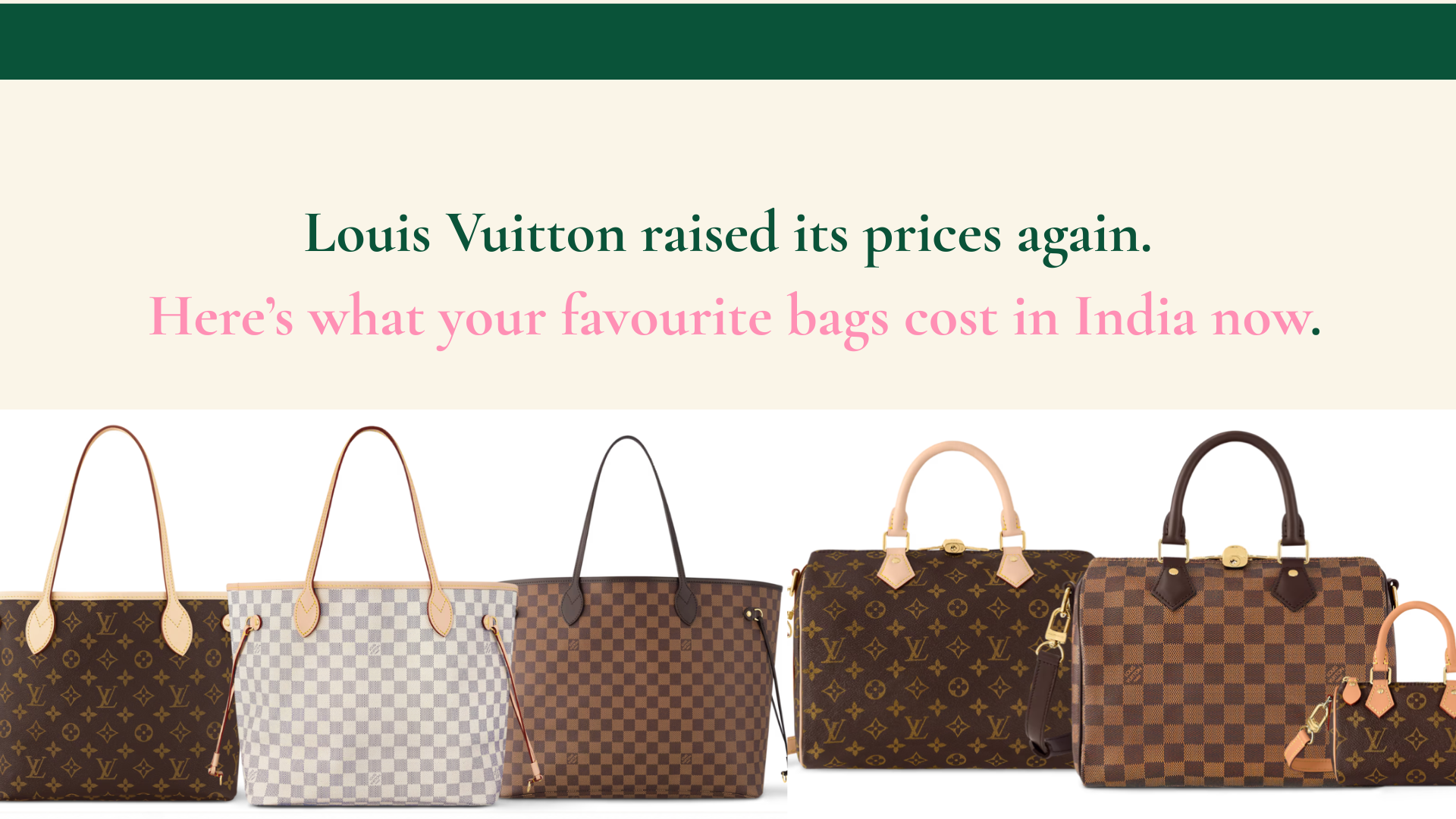
If you’ve been waiting for the “right time” to buy that Louis Vuitton bag, we have some slightly unfortunate news: it probably wasn’t now.
Louis Vuitton prices moved up again in 2026 across several iconic handbag families including the Speedy, Neverfull, Alma, Keepall and Pochette Métis. Most of the increases tracked were in the 2–3% range, while some styles moved higher.
Now, 2% or 3% might not sound particularly dramatic. But when the bag already costs a couple of lakhs, that small percentage starts looking a lot less small.
And the timing is interesting.
LVMH, Louis Vuitton’s parent group, reported revenue of €19.1 billion in the first quarter of 2026. Overall organic revenue grew by 1%, while the Fashion & Leather Goods division which includes Louis Vuitton declined by 2% organically.
In other words, luxury prices are moving up at a time when the business of selling new luxury fashion isn’t exactly booming.
So, what do some of your favourite Louis Vuitton bags cost in India now? And what do these increases mean for the way we buy luxury?.
Across the Louis Vuitton styles most searched for in India, including the Speedy, Neverfull, Keepall, OnTheGo, Alma and Pochette Métis, the 2026 increases mostly landed between 2.1% and 3.2%. On a bag already priced above two lakh rupees, even a 3% increase adds several thousand rupees to the final bill.
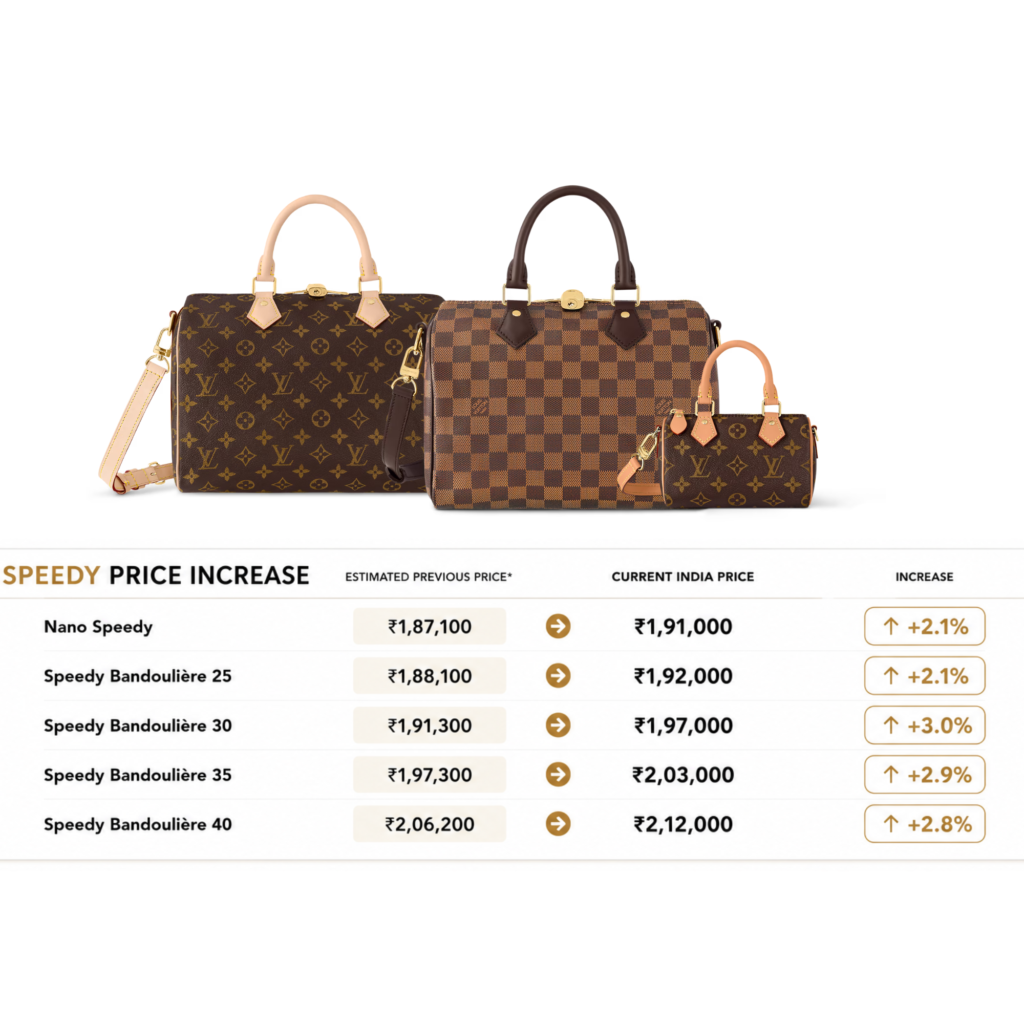
The Speedy has been around for decades, and apparently, so have its price increases.
The Nano Speedy currently retails for ₹1,91,000 in India, while the Speedy Bandoulière 25 sits just above it at ₹1,92,000.
Both styles saw increases of approximately 2.1% in the reference price analysis.
Want something slightly bigger?
The Speedy Bandoulière 30 now costs ₹1,97,000, while the 35 and 40 have crossed the ₹2 lakh mark at ₹2,03,000 and ₹2,12,000 respectively.
Basically, the bigger the Speedy, the bigger the dent in your bank account.
The Neverfull has been one of Louis Vuitton’s most recognisable bags for years. Practical, spacious and apparently determined to keep getting more expensive.
The Neverfull PM currently retails for ₹1,73,000 in India, while the MM is priced at ₹1,80,000.
And if you need enough room to carry your laptop, water bottle, makeup pouch and half your life, the Neverfull GM now costs ₹1,84,000.
With the increases in the reference analysis hovering around 3%, the Neverfull continues its slow but steady climb up the luxury price ladder.
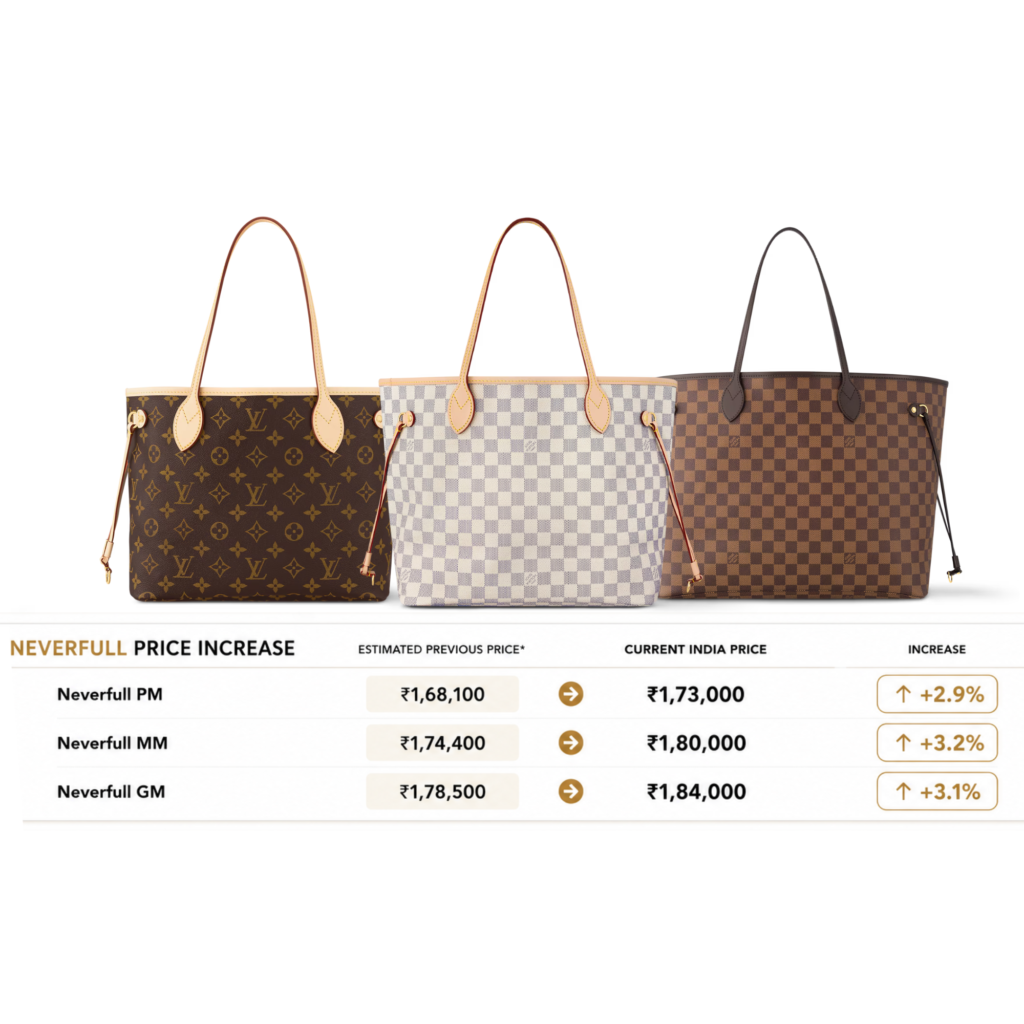
Figure 2. Estimated previous prices compared with current Louis Vuitton India retail prices for selected Neverfull models.
Source: Fashionphile 2026 price analysis and official Louis Vuitton India product listings.
The Neverfull continues its slow but steady climb up the luxury price ladder. If yours is on the wish list, see what’s currently available pre-owned on SWRL before you pay full retail.
The Keepall was designed for travel. Unfortunately, buying one might now require its own travel budget.
The Keepall Bandoulière 45 currently retails for ₹2,60,000 in India. The 50 comes in at ₹2,68,000, while the 55 will set you back ₹2,73,000.
All three saw increases of around 3% in the reference analysis.
Not exactly the kind of baggage fee anyone asked for.
Figure 3. Estimated previous prices compared with current Louis Vuitton India retail prices for selected Keepall models.
Source: Fashionphile 2026 price analysis and official Louis Vuitton India product listings.
OnTheGo was already one of the pricier bags on this list, and 2026 hasn’t exactly helped.
It currently retails for ₹3,10,000 in India, while the GM sits at ₹3,20,000.Based on the reported percentage increases, that works out to an estimated increase of roughly ₹9,000 per bag.
Enough for a flight ticket. Or several very nice dinners.
Or, you know, approximately 3% of another Louis Vuitton bag.
Louis Vuitton isn’t the only luxury house dealing with the complicated relationship between higher prices and increasingly cautious shoppers.
Between 2020 and 2023, selected key products from Chanel and Dior increased in price by 59% and 51% respectively, according to analysis cited by The Business of Fashion.
By early 2026, the industry conversation had started to shift. Instead of simply asking how high luxury brands could raise prices, brands were facing a more difficult question: how much are shoppers still willing to pay?
The Business of Fashion reported that Chanel and Dior were adjusting their strategies after years of aggressive price increases, as the wider luxury market became more challenging.
Compared with those dramatic multi-year increases, Louis Vuitton’s mostly 2–3% increases across the styles covered here look relatively restrained.
But “relatively restrained” hits differently when the starting price is already ₹2 lakh.
Price increases are nothing new in luxury. Inflation, labour costs, raw materials, currency movements and manufacturing expenses can all affect retail prices.
But luxury pricing is about more than covering costs. Price is also part of positioning. Luxury brands need their products to remain desirable, exclusive and difficult enough to access that buying one still feels significant.
That creates an interesting balancing act. Raise prices too slowly, and a brand risks losing some of the exclusivity that makes luxury feel like luxury. Raise them too aggressively, and shoppers may decide that the product is no longer worth buying brand new.
And this is where I think the 2026 increases become particularly interesting.
LVMH’s Fashion & Leather Goods division declined 2% organically in Q1 2026, even as the group delivered 1% overall organic growth. That doesn’t mean Louis Vuitton raised prices because sales were weaker. There is no public evidence establishing that connection. But it does show that these increases are happening in a more cautious luxury environment.
That caution looks different in India than it does elsewhere. Euromonitor put India’s luxury market growth at around 10% for 2025 alone, among the fastest growth rates of any major luxury market globally, and Bain projects India’s luxury market could pass 85 billion dollars by 2030. Raising prices in a market growing this quickly carries far less risk for Louis Vuitton than doing so in a slower one, which may be part of why Indian buyers shouldn’t expect the pace of increases to slow down anytime soon.
For years, luxury brands could raise prices and reasonably expect aspirational shoppers to keep following. Now, buyers have more options. They can buy new. Buy pre-owned. Rent. Wait. Compare prices. Research resale value. Or decide that another brand offers better value.
Personally, I think that is what makes today’s luxury consumer more interesting. The question is no longer simply, “Can I afford this bag?” It’s also, “Is buying this bag brand new actually the smartest way to own it?”
The growth of preloved market suggests that more shoppers are asking exactly the question above.
Research from BCG found that the global secondhand fashion and luxury market is growing around three times faster than the firsthand market and could reach $360 billion by 2030. Handbags are particularly relevant here: among the consumers BCG surveyed, secondhand products already represented 40% of handbag wardrobes, rising even higher among Gen Z shoppers.
India’s own resale and luxury market is moving in the same direction. The country’s broader luxury goods market is projected to grow from around 10.6 billion dollars in 2025 to 18.8 billion dollars by 2034, according to IMARC Group, and India’s luxury fashion resale segment specifically is growing at a double digit pace as more buyers discover the category.
That doesn’t mean every luxury handbag is an investment, or that buying pre-owned automatically guarantees a better deal. It does mean that the way people access luxury is changing. A bag no longer has to move in one direction, from boutique to buyer to the back of a wardrobe. It can be bought, sold, rented, rediscovered and owned again.
For Indian luxury shoppers, there are three things worth taking away from the 2026 price changes.
First, even small percentage increases matter when the starting price of a handbag is already between ₹1.5 lakh and ₹3 lakh. Second, comparing new and pre-owned prices before purchasing is becoming increasingly worthwhile. And third, authentication matters. As the luxury resale market grows, buyers need to know that the product they are purchasing is genuine and accurately represented.
Waiting for your dream Louis Vuitton bag to suddenly become cheaper probably isn’t the strongest strategy. But paying the latest boutique price isn’t your only option either.
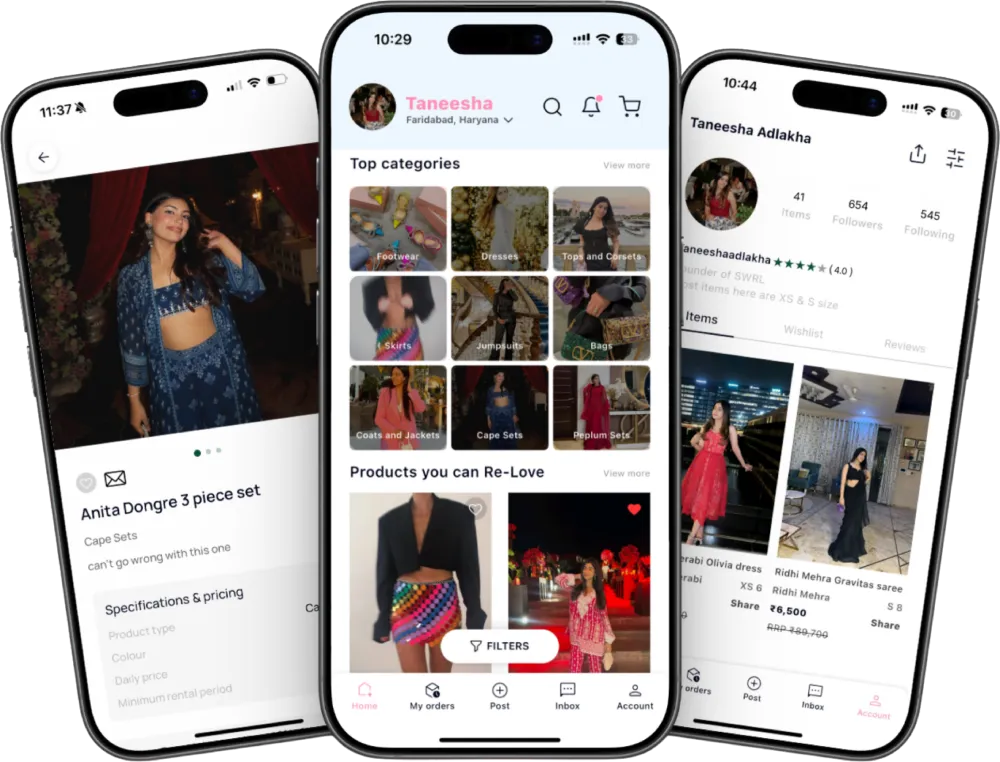
Pre-owned luxury allows existing designer pieces to stay in circulation, while giving buyers another way to discover and access iconic bags. SWRL, an authenticated luxury rental and resale platform, helps buyers discover luxury pieces that are already in circulation rather than treating brand-new retail as the only way to participate in luxury. Browse the current edit in SWRL’s bags category, or read how another Louis Vuitton peer, the Lady Dior, holds its price and resale value in India.
And if you already own one of these bags, rising retail prices are exactly the moment worth checking what it could be worth if you decided to lend or sell it instead. Here’s how lending on SWRL works.
So before you walk into the boutique and tap your card for the latest retail price, it might be worth checking what’s already out there. Your dream bag might already have an owner who’s ready to let it go. And that’s exactly where SWRL comes in.

























Shared with love, from around
the world